Israeli strike kills an elite Hezbollah commander in the latest escalation linked to the war in Gaza
Jan 8, 2024

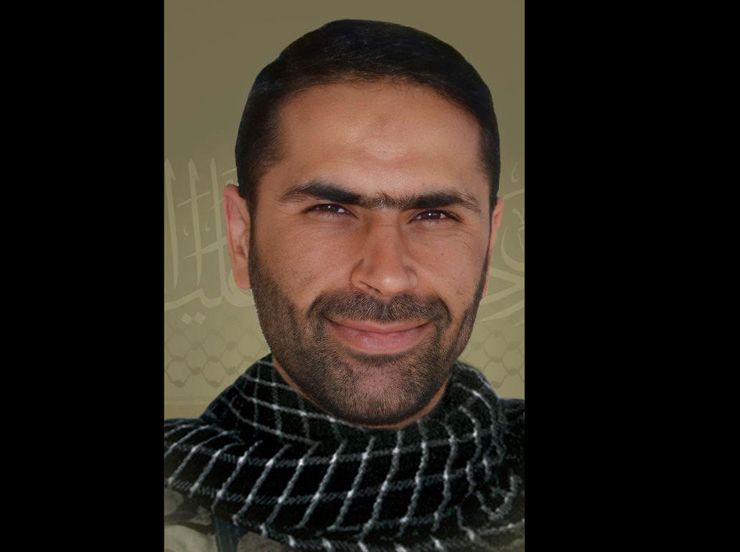
An Israeli airstrike has killed an elite Hezbollah commander in southern Lebanon

BEIRUT (AP) — An Israeli airstrike killed an elite Hezbollah commander Monday in southern Lebanon, the latest in an escalating exchange of strikes across the border that have raised fears of another Mideast war even as

the fighting in Gaza

exacts a mounting toll on civilians.

The strike on an SUV killed a commander in a secretive Hezbollah unit that operates along the border, according to a Lebanese security official who spoke on condition of anonymity in keeping with regulations. The commander,

Wissam al-Tawil

, was a veteran of the Iranian-backed Lebanese force who took part in the 2006 cross-border kidnapping of two Israeli soldiers that triggered the last war between Israel and Hezbollah, an official in the group said.

He is the most senior Hezbollah militant killed since Hamas’ Oct. 7 attack into southern Israel triggered all-out war in Gaza and lower-intensity fighting between Israel and Hezbollah,

which has escalated

since an Israeli strike killed a senior Hamas leader last week in Beirut.

U.S. Secretary of State Antony Blinken, who is

back in the region this week,

appears to be trying to head off

a wider conflict

.

In other developments, Israel said it has largely wrapped up major operations in northern Gaza, though fighting and bombardment there continue. Israeli forces are now focusing on the central region and the southern city of Khan Younis, where thousands more Palestinians fled.

Israeli officials say the fighting will continue for many more months as the army seeks to dismantle Hamas and return scores of hostages taken during the

militants' Oct. 7 attack

.

The offensive has already killed over 23,000 Palestinians, devastated vast swaths of the Gaza Strip, displaced nearly 85% of its population of 2.3 million and left

a quarter of its residents facing starvation

.

‘SICKENING SCENES’ IN GAZA’S OVERWHELMED HOSPITALS

Medics, patients and displaced people fled from central Gaza's main hospital as fighting drew closer, witnesses said Monday. Losing the facility would be another major blow to a health system shattered by three months of war.

Doctors Without Borders and other aid groups withdrew from Al-Aqsa Martyrs Hospital in Deir al-Balah, saying it was too dangerous amid Israeli bombardment, drone strikes and sniper fire. That spread panic among people sheltering there. Thousands left, joining the hundreds of thousands who have fled further south, said a hospital staffer, Omar al-Darawi.

Tens of thousands of people have sought shelter in Gaza’s hospitals, which are struggling to treat the continuous flow of wounded from Israeli strikes. Only 13 of Gaza’s 36 hospitals are even partially functional, according to the U.N. humanitarian office.

The Al-Aqsa hospital was struck multiple times in recent days, al-Darawi said. After the pullout, large numbers of patients who cannot be moved were concentrated on one floor to be treated by remaining doctors. “They need special care, which is unavailable,” he said.

World Health Organization staff who visited Sunday saw “sickening scenes of people of all ages being treated on blood-streaked floors and in chaotic corridors,” WHO chief Tedros Adhanom Ghebreyesus said. “The bloodbath in Gaza must end.”

More dead and wounded arrive at the hospital each day as Israeli forces advance in central Gaza, backed by heavy airstrikes. The military said Monday it had uncovered a large Hamas site for building rockets in the nearby Bureij refugee camp.

Thousands have been fleeing the area, heading south. Fifteen members of the Ayash family crammed into a van with their belongings for the journey. “Along the way there was banging, missiles, bombing, and planes,” said Khawla Ayash.

Reaching Muwasi, a coastal area outside Rafah, they unloaded bags, blankets and thin mattresses and began setting up tents alongside other relatives.

The U.N. children’s agency UNICEF warned that 90% of Gaza’s children under 2 were consuming only bread and milk.

“As the threat of famine intensifies," hundreds of thousands of children face severe malnourished, with some at risk of death, said Catherine Russell, UNICEF’s executive director. "We cannot allow that to happen."

DIRE CONDITIONS IN THE NORTH

The situation is even more dire in northern Gaza, which Israeli forces cut off from the rest of the territory in late October.

Entire neighborhoods have been demolished, and most of the population has fled. Tens of thousands who remain face shortages of food and water. The WHO said Sunday it has been unable to deliver supplies to northern Gaza for 12 days because of bombardment and the inability to guarantee safe passage with the Israeli military.

Israel still battles what it describes as pockets of militants.

An airstrike early Sunday flattened a four-story home filled with displaced people in

the urban Jabaliya refugee camp

, killing at least 70, including women and children, according to Mahmoud Bassal, a spokesman for Gaza’s civil defense. There was no immediate confirmation from the Health Ministry, which has struggled to operate in the north.

Since the war began, more than 23,000 Palestinians have been killed, about two-thirds of them women and children, and more than 58,000 have been wounded, according to the

Health Ministry in Hamas-run Gaza

. The death toll does not distinguish between combatants and civilians.

Israel blames Hamas for civilian casualties because the group operates in populated residential areas, but the military almost never comments on the intended target in strikes that kill large numbers of civilians. The military says it has killed some 8,000 militants, without providing evidence, and says 176 of its own soldiers have been killed in the offensive.

SEEKING TO HEAD OFF A WIDER WAR

Blinken focused on preventing the war from spreading as he held talks in Gulf countries and Jordan over the past two days.

For the past three months, both Israel and Hezbollah have sought to limit their cross-border exchanges. Hezbollah appears wary of risking an all-out war that would bring massive destruction to Lebanon.

But last week's killing of Hamas’ deputy political leader, Saleh Arouri, in Beirut threatens to throw the two sides into an escalating spiral.

A Hezbollah rocket barrage

hit a sensitive air traffic base

Saturday in northern Israel in one of the group's biggest attacks of the war — an “initial response” to Arouri's killing, Hezbollah said.

Israeli leaders say their patience with Hezbollah rocket fire is wearing thin and that if diplomacy doesn't stop it, they are prepared to go to war. They have expressed particular concern about the Radwan Force, the elite Hezbollah unit in which al-Tawil was a commander, which operates along the border.

Prime Minister Benjamin Netanyahu, visiting troops near the border, vowed to return security to the north.

"We prefer that this be done without a wider campaign, but that won’t stop us,” he said.

Hezbollah began firing rockets shortly after Hamas’ Oct. 7 attack, saying it aimed to ease pressure on Gaza. Hamas and other militants killed about 1,200 people in southern Israel that day, mostly civilians, and took some 250 people hostage, over 130 of whom remain in captivity.

In the cross-border exchanges, nearly 200 people have been killed on the Lebanese side, mostly fighters but also 20 civilians. On the Israeli side, five civilians and 12 soldiers have been killed and more than 150 injured. Tens of thousands of people in both countries have been driven from homes near the border.

___

Shurafa reported from Deir al-Balah, Gaza Strip, and Jeffery from Cairo. Associated Press writers Kareem Chehayeb in Beirut and Samy Magdy in Cairo contributed.

___

Find more of AP’s coverage at:

https://apnews.com/hub/israel-hamas-war
More News

The Supreme Court may be about to make America’s prisons much crueler
Oct 21, 2026
The Supreme Court may be about to make America’s prisons much crueler

Update, October 21, 11:45 am ET: The Supreme Court released a brief order on October 21, which ruled against the Trump administration’s request to deny gender-affirming care to transgender prisoners. The order is two sentences long. It is temporary. And it does not explain the Court’s reasoning. So it is not clear why the Court ruled against Trump or even whether Trump will lose if this case reaches the Court again after it has be fully litigated in lower courts. Justices Clarence Thomas and Samuel Alito dissented. The article below was originally published on October 13. On the first day of his second term, President Donald Trump issued an executive order requiring the Bureau of Prisons to “ensure that no Federal funds are expended for any medical procedure, treatment, or drug for the purpose of conforming an inmate’s appearance to that of the opposite sex.” Issued alongside a record 26 other orders that day, it was an unsurprising development, because Trump had made this issue one of the centerpieces of his 2024 campaign. The fate of that executive order, as well as the US Bureau of Prisons’ (“BOP”) memoranda implementing the order, is now before the Supreme Court in a case called Trump v. Kingdom. And, while this case obviously has high stakes for incarcerated transgender people specifically, the Court’s resolution of this case could potentially have far greater reach — cutting off many cis and transgender people’s access to healthcare while they are incarcerated. That’s because one of the central questions in Kingdom — though this issue is not yet before the justices — is when the Constitution requires prisons to provide medical care to incarcerated people. In Estelle v. Gamble (1976), the Supreme Court held that the Eighth Amendment’s ban on “cruel and unusual punishments” imposes on the government an “obligation to provide medical care for those whom it is punishing by incarceration.” People in prison, after all, cannot simply drive themselves to the hospital if they get sick. If the prison does not give them adequate medical care, they will suffer untreated and potentially die. For procedural reasons, the Court is unlikely to opine on whether Estelle requires prisons to provide gender-affirming care to trans people right away. But the question of when the Eighth Amendment requires prisons to provide medical care to incarcerated people is front and center in the Kingdom case, which means the Court could potentially use Kingdom to limit all imprisoned people’s access to healthcare — or even to undercut the Constitution’s protections against cruel and unusual punishments more broadly. Ironically, this case also arises out of a famous political blunder by pro-trans advocates. In 2019, when then-Sen. Kamala Harris was seeking her party’s 2020 presidential nomination, the ACLU circulated a questionnaire to candidates that asked if they would use presidential authority “to ensure that transgender and nonbinary people who rely on the state for medical care — including those in prison and immigration detention — will have access to comprehensive treatment associated with gender transition, including all necessary surgical care?”  Harris responded that she would, and also said that she “pushed the California Department of Corrections and Rehabilitation to provide gender transition surgery to state inmates” while she was state attorney general.  Years later, during his 2024 debate with Harris, Trump claimed that the then-vice president “wants to do transgender operations on illegal aliens that are in prison.” And not long after, his opposition to gender-affirming care for trans people in prison became a key part of his campaign. It’s unclear why the ACLU thought it was a good idea to shine a light on this issue in 2019 because, at the time, the BOP provided gender-affirming care to people in federal prison. The ACLU — which represents the pro-trans side in the Kingdom case — now argues that transgender people in federal prison have had access to at least some forms of gender-affirming care “since at least 1992.” Indeed, Trump’s own administration concluded in a 2018 memo that the Bureau of Prisons’ “statutory mandate to provide basic medical and mental health care” to incarcerated people obligated it to provide “pharmaceutical interventions (e.g., cross-gender hormone therapy), hair removal and surgery (if individualized assessment indicates surgical intervention is applicable)” to transgender people in prison if their doctors determined that these interventions are “medically necessary care.” In any event, regardless of why Trump fixated on cutting off trans healthcare for people in federal prison, Kingdom is now before the Court. That means that the fate of trans people in prison — and, if the Eighth Amendment issue eventually reaches the Court, all incarcerated people — is now in the hands of a Republican Court that is often hostile to trans litigants, and that has, at times, signaled that it wants to drastically roll back the scope of the Eighth Amendment. What are the legal issues in the Kingdom case? At least since Estelle, the Court has held that people who are incarcerated are not also sentenced to live and die without medical care. As the Court said in Brown v. Plata (2011), “a prison that deprives prisoners of basic sustenance, including adequate medical care, is incompatible with the concept of human dignity and has no place in civilized society.” Under Estelle and Brown, transgender people often have a right to gender-affirming care during their incarceration. As the US Court of Appeals for the Ninth Circuit held in Edmo v. Corizon (2019), such a person must show that they have a “serious medical need” for such care — typically by demonstrating that the care was prescribed to them by their health provider. But the Constitution does not permit prisons to deny medically necessary care to incarcerated people. In Kingdom, the ACLU raised this Eighth Amendment argument in the lower courts, but those lower courts ruled in favor of transgender people in prison on different, much more technical legal grounds. For over three decades, from at least 1992 to 2025, according to the ACLU’s brief to the justices, the BOP provided at least some gender-affirming care, including hormone therapy, to transgender people. This matters because, when a federal agency changes its policies, a federal law typically requires it to “examine the relevant data and articulate a satisfactory explanation for its action, including a rational connection between the facts found and the choice made.” This explanation often must explain the agency’s justification for “disregarding facts and circumstances” that justified the previous policy. Both the ACLU and the lower courts that heard Kingdom argue that the Trump administration did not comply with this obligation when it cut off care for trans people in prison.  Among other things, the district court that heard this case determined that the administration cited “zero evidence from its own medical or mental health care professionals to support its conclusions” against providing transgender healthcare. While the Trump administration argues that providing gender-affirming care makes prisons less safe, the district court also noted that “the government has not cited a single instance of gender-affirming care giving rise to safety concerns despite having provided such care for many years.” Is this a persuasive legal argument against the Trump administration’s new policy? I think it is. And so did three federal judges that previously heard the Kingdom case. But the fate of trans people in prison is now in the hands of a Supreme Court that rarely rules in favor of transgender litigants, and that has a history of handing down legally incoherent opinions that are inconsistent with the Court’s own precedents, and that also deny legal rights to trans people. The current Court’s uncertain commitment to the Eighth Amendment Because the lower courts that heard Kingdom did not rule on the Eighth Amendment question, Kingdom should not currently give the justices an opportunity to roll back Estelle. But, in the likely event that this Court rejects the ACLU’s argument that the Trump administration did not adequately explain its new policy, the case will return to the lower courts and the Eighth Amendment issue will be fully litigated — teeing up the Eighth Amendment question for the justices to decide in the near future. This issue could arise, moreover, at the exact moment that some justices are pushing for sweeping changes to how their Court understands the term “cruel and unusual punishments.” Indeed, at least some of the Supreme Court’s recent Eighth Amendment precedents suggest that the Republican justices want a wholesale rewrite of the Court’s previous precedents laying out what constitutes cruel and unusual punishment. Since the mid-to-late twentieth century, the Court has held that, in Chief Justice Earl Warren’s words, the Eighth Amendment “must draw its meaning from the evolving standards of decency that mark the progress of a maturing society.” Thus, as certain forms of punishment grow more uncommon, they become more constitutionally dubious. This “evolving standards of decency” framework is front and center in nearly every major Supreme Court decision interpreting the Eighth Amendment for the last five or six decades, including Estelle. In Bucklew v. Precythe (2019), however, the Court’s Republican majority seemed to abandon this framework. Although decades worth of pre-Bucklew decisions established that a punishment is unconstitutional if it is considered cruel and unusual today, Bucklew suggested that a method of punishment is unconstitutional only if it “had fallen out of use” at “the time of the founding.”  Bucklew did list some methods of punishment that fail this test, but they are things like “disemboweling” or “burning alive.”   Thus, if taken seriously, Bucklew’s new approach to Eight

Expert Features

The Expert Features reports on the issues and the world’s everyday news. Handled by experts in different niches, you will find different subjects and perspectives.