Live updates | Israeli soldiers exchange fire along the border with Egypt as regional tensions rise
Jan 16, 2024
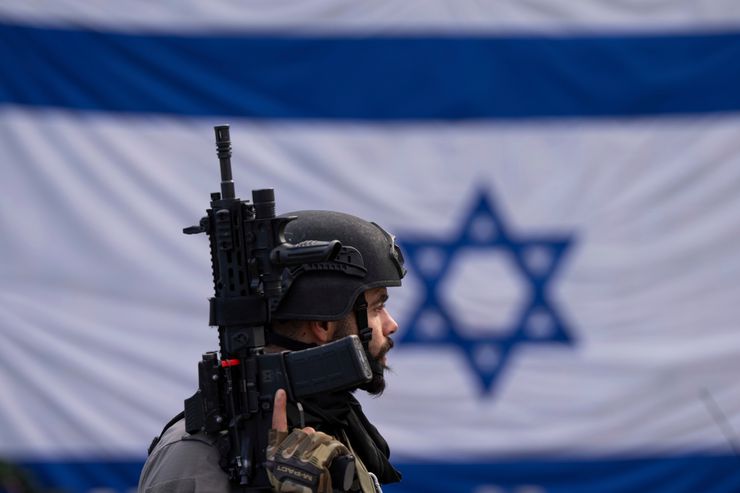
Israel says one of its troops was “slightly injured” in an exchange of fire along the country’s border with Egypt
Israel said one of its troops was “slightly injured” in an exchange of fire along the country’s border with Egypt, which Cairo attributed to drug smuggling. One person in Egypt was killed. Ties between the two countries have been strained since the Israel-Hamas war began.
Israel’s defense minister said Monday that the intense Israeli military offensive in the southern Gaza Strip will soon be scaled back, but he is ruling out a cease-fire. More than 100 days into Israel's war against Hamas, Palestinian authorities said the death toll in the enclave passed 24,000.
The
Oct. 7 Hamas attack
from Gaza into southern Israel that triggered the war killed around 1,200 people and saw some 250 others taken hostage by militants.Currently:
— Houthi rebels
strike a U.S.-owned ship
off the coast of Yemen in the Gulf of Aden, raising tensions.— U.N. agency chiefs say
Gaza needs more aid
to arrive faster, warning of famine and disease.— Iran strikes targets in northern Iraq and Syria as
regional tensions escalate
.— Palestinian ambassador to the U.N. calls on Non-Aligned Movement to
pressure Israel to enforce a cease-fire
.— Find more of AP's coverage at
https://apnews.com/hub/israel-hamas-war
.Here's the latest:
EXCHANGE OF FIRE ALONG ISRAEL-EGYPT BORDER KILLS 1 IN EGYPT, INJURES AN ISRAELI SOLDIER
JERUSALEM — Israel said one of its troops was “slightly injured” in an exchange of fire along the country’s border with Egypt, which Cairo attributed to drug smuggling. One person in Egypt was killed.
The statement from the Israeli military late on Monday said the fighting happened near the Nitzana border crossing with Egypt on the Sinai Peninsula, and that there were 20 armed suspects. The Israelis and the suspects exchanged fire, with Israel saying “hits were identified” among the suspects, without elaborating.
The Israeli soldier who was hit “was evacuated to a hospital to receive medical treatment and her family has been informed,” the military said.
The Israeli military did not identify the suspects. An Egyptian military statement on Tuesday described the suspects involved as trying to smuggle drugs. It said one person was killed and six people were arrested afterwards.
Egypt and Israel have had a peace deal since 1979, but Israel’s monthslong war against Hamas in the Gaza Strip has strained ties.
OFFENSIVE IN SOUTHERN GAZA SOON WILL BE SCALED BACK, ISRAELI DEFENSE MINISTER SAYS
TEL AVIV, Israel — Israel’s defense minister says the intense Israeli military offensive in the southern Gaza Strip will soon be scaled back, but he is ruling out a cease-fire.
At a news conference Monday, Yoav Gallant said Israel recently ended its intensive ground operation in northern Gaza after taking military control of the area. He said he expected similar results in the south as well.
“It will end soon,” he said. “In both places we will reach the moment for the next stage.”
The statement comes a day after the White House called on Israel to curtail its offensive.
Gallant gave no details on timing and said Israel is still targeting Hamas’ leaders. He called them the “head of the snake” and said they are believed to be hiding in Khan Younis, the southern city where the offensive has been focused in recent weeks.
Gallant also ruled out a cease-fire, saying military pressure is the only way to win the release of the more than 100 hostages still in Hamas captivity.
“Only from a position of strength can we ensure the release of hostages,” he said.
UN CHIEF WARNS OF STARVATION AND DISEASES IN GAZA AS AID STAGGERS
UNITED NATIONS — The U.N. secretary-general says Gaza faces “the long shadow of starvation” and the risk of disease outbreaks because of barriers to delivering vital aid.
Antonio Guterres did not mention Israel by name in his remarks Monday, but blamed the inability to meet Gaza’s growing humanitarian needs on widespread bombardment, barriers to entering the territory and restrictions on distribution inside of it – all under Israel’s control.
He said he was “deeply troubled by the clear violation of international humanitarian law that we are witnessing.”
Israeli officials have denied hindering aid delivery, saying the U.N. needs to provide more workers and trucks.
But Guterres said the U.N. and its partners “cannot effectively deliver humanitarian aid while Gaza is under such heavy, widespread and unrelenting bombardment.” He pointed to the deaths of 152 U.N. staffers in Gaza since the start of the war, “the largest single loss of life in the history of our organization.”
He called for an immediate humanitarian cease-fire and the release of all hostages captured by Hamas in its Oct. 7 rampage into southern Israel, which triggered the war.