Live updates | Palestinians report Israeli airstrikes including in southern Gaza
Nov 4, 2023
Palestinians in Gaza reported Israeli airstrikes overnight into Saturday across the besieged enclave, including explosions in the south where Israel had told civilians to seek refuge as its ground operation intensifies in northern Gaza
Palestinians in Gaza reported Israeli airstrikes overnight into Saturday across the besieged enclave, including explosions in the south where Israel had told civilians to seek refuge as its ground operation intensifies in northern Gaza.
Calls for a
humanitarian pause
increased with the UNRWA, the United Nations' agency for Palestinian refugees, reporting the average Palestinian in Gaza is surviving on two pieces of bread a day, and only one of three water supply lines from Israel is operational. Israeli Prime Minister Benjamin Netanyahu said Friday, “We are going full steam ahead” unless the hostages held by Hamas are released.The Palestinian death toll in the Israel-Hamas war has reached 9,227, according to the Hamas-run
Health Ministry in Gaza
. In the occupied West Bank, more than 140 Palestinians have been killed in violence and Israeli raids. The UNRWA says 72 of its staff members have been killed.More than 1,400 people in Israel have been killed, most of them in the
Oct. 7 Hamas attack
that started the fighting, and 242 hostages were taken from Israel into Gaza by the militant group.Roughly 1,100 people have
left the Gaza Strip
through the Rafah crossing since Wednesday under an apparent agreement among the United States, Egypt, Israel and Qatar, which mediates with Hamas.Currently:
1.
Blinken
tries to cajole Arab leaders on support for post-conflict Gaza.2. Israel’s fortified
underground blood bank
processes unprecedented amounts.3. Honduras becomes the latest Latin American country to
recall its ambassador to Israel
.4. Israel
deports thousands of Palestinian workers
back to Gaza’s war zone.5. A U.N. official says the average Palestinian in Gaza is
living on two pieces of bread a day
6. Find more of AP’s coverage at
https://apnews.com/hub/israel-hamas-war
.Here’s what is happening in the latest Israel-Hamas war:
AT LEAST 21 REPORTED WOUNDED IN AIRSTRIKE NEAR HOSPITAL
CAIRO — The Palestinian Red Crescent says at least 21 people taking shelter outside Al-Quds hospital in Gaza city were wounded Saturday afternoon when an Israeli airstrike hit a building close to the entrance of the emergency ward.
Writing on X platform, formerly Twitter, the charity said the bombing, the closest to the facility, stoked panic and fear among displaced families camping outside the hospital. There was no immediate comment from the Israeli military.
Israel’s military has repeatedly demanded the evacuation of the hospital and other medical facilities in northern Gaza. Such a demand was deemed impossible by the U.N. health agency and other aid groups given the increasing number of patients and thousands of people sheltering in the facilities.
LEBANON REPORTS ISRAELI AIRSTRIKES AND HEZBOLLAH SHELLING
RMEISH, Lebanon — Israeli warplanes conducted airstrikes along the border with Lebanon Saturday as the militant Hezbollah group attacked several Israeli army posts along the tense frontier.
The escalation came a day after Hezbollah leader Sayyed Hassan Nasrallah said his powerful group is already engaged in unprecedented fighting along the border and threatened a further escalation.
Hezbollah said in a statement that its fighters attacked at least six Israeli posts along the border with “suitable rockets and weapons.”
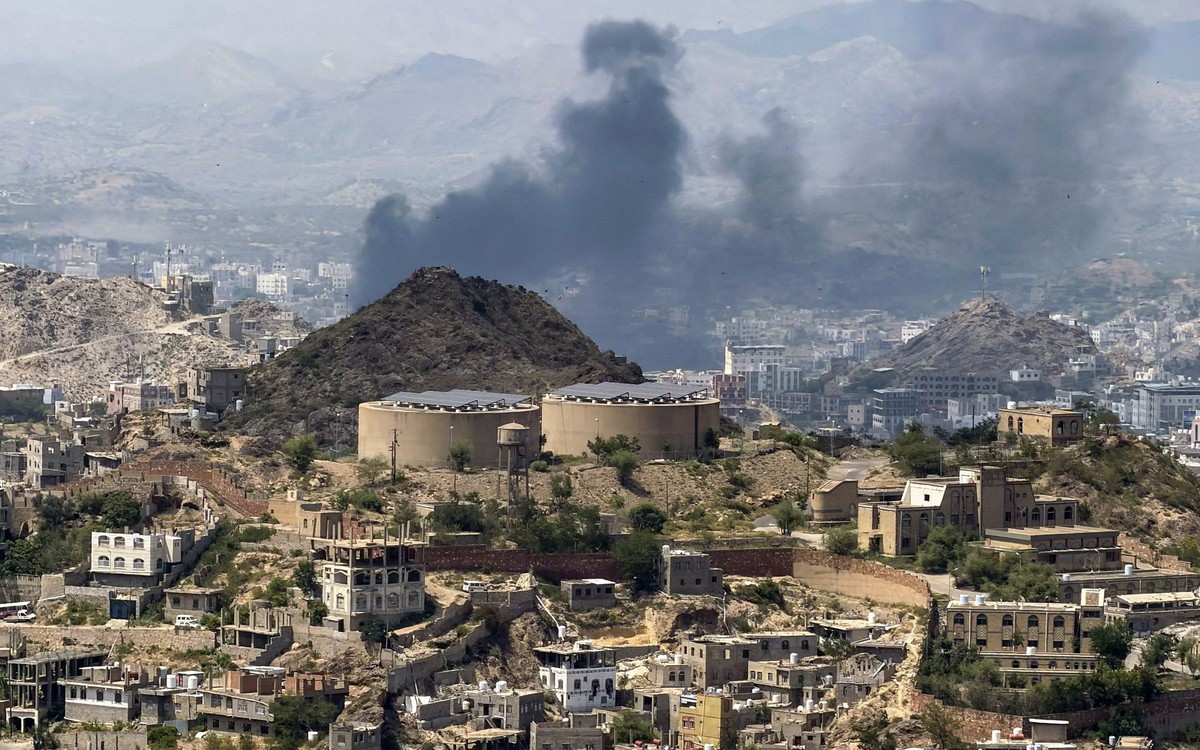
On the outskirts of the border village of Rmeish, an Israeli airstrike in a rugged area along the border caused thick gray smoke. Artillery shelling could be heard from a distance.
Lebanon’s state-run National News Agency reported airstrikes on the outskirts of several border villages including Labbouneh and Hibarieh.
ERDOGAN SAYS HE CAN NO LONGER SPEAK WITH NETANYAHU
ISTANBUL — Turkish President Recep Tayyip Erdogan said he could no longer speak to Israeli Prime Minister Benjamin Netanyahu in light of the bombardment of Gaza, Turkish media reported Saturday.
“Netanyahu is no longer someone we can talk to. We erased him and threw him away,” Erdogan told journalists on a flight back from a summit in Kazakhstan.
Erdogan, however, added that his foreign minister and intelligence chief would continue to talk to “the Israeli side” as well as Hamas and other Palestinian groups.
Since Israel launched its attack on Gaza, Erdogan’s rhetoric against the operation has become increasingly critical, ending efforts for Turkey and Israel to reconcile after more than a decade of mostly hostile relations.
Erdogan, in remarks reported by state-run Anadolu news agency and other Turkish media, also reiterated the possibility of Turkey being a guarantor for any future long-term peace deal between Israel and Palestine.
“If Greece can be a guarantor country, England can be a guarantor country and Turkey is a guarantor country in Cyprus, why can’t there be a similar structure in Gaza?” the president said, referring to a 1960 treaty on the east Mediterranean island.
He added that Ankara was “taking initiatives and developing formulas” to find peace.
Criticizing international support for Israel, Erdogan said “the whole West, especially America, is currently on Israel’s side” and that people “should not expect a fair attitude” from the European Union over Gaza.
SEVERAL REPORTED KILLED AFTER AIRSTRIKES HIT SHELTER FOR DISPLACED
RAFAH, Gaza Strip — Places where displaced Palestinians sought refuge from Israeli bombardment came under attack on Saturday, with Israeli strikes killing several people at a U.N. shelter and outside the gates of a major hospital.
The U.N. Palestinian refugee agency says that two strikes hit a shelter that it runs for internally displaced in the northern Gaza Strip, killing several people who had sought refuge in tents in the schoolyard as well as women baking bread inside the building.
The agency’s spokesperson, Juliette Touma, said that initial reports indicated that 20 people were killed by the strikes on Fakhoura School just west of the Jabliya refugee camp. She said the agency could not confirm the death toll. The Gaza-based Health Ministry reported that 12 people were killed at Fakhoura School and another 50 were wounded.
Some 18,000 Palestinians were sheltering at Fakhoura School, according to the agency’s most recent estimates.
Earlier on Saturday, an airstrike hit the gates of al-Nasser Hospital in Gaza City, where thousands had sought shelter. The strike killed at least two people, according to the Health Ministry.
US OFFICIALS BELIEVE ISRAEL'S RESISTANCE T0 AID DELIVERIES WILL EASE
AMMAN, Jordan — Two senior U.S. officials traveling with Secretary of State Antony Blinken have compared Israeli Prime Minister Benjamin Netanyahu's opposition to humanitarian pauses in the fighting to Israel’s initial refusal to allow any assistance in to Gaza in the early days of the war.
After the Israelis realized the strategic implications of denying food, water, electricity and other supplies to Palestinian civilians, their resistance began to erode, according to the officials who spoke to reporters on condition of anonymity to describe private diplomatic discussions.
About 100 trucks entered Gaza over the past two days and the current capacity is about 100-105 per day, but the Israelis have indicated they are now willing to consider screening and allowing in as many trucks as can be handled efficiently by the implementers on the ground, including drivers, warehouse operations, distributors and others from a variety of international organizations like the U.N. agency for Palestinian refugees and the World Food Program, the officials said.
Given the already exponential increase in southern Gaza’s population by roughly 800,000 to 1 million and the potential for many of the 300,000-400,000 still in the north to flee to the south, the needs are expected to grow to require as many as 500-600 trucks per day, the officials said.
But increasing to that capacity will also depend on the relative stability of the security situation on the ground, something unlikely to be achieved without humanitarian pauses, which would give a measure or confidence to not only Palestinian civilians but also to aid workers and distributors, according to the officials.
The officials said they believed the Israelis would come to understand the necessity of providing adequate assistance to Gaza’s growing southern population but were still grappling with what pauses might mean for the intense pressure they are currently applying against Hamas to get them to release Israelis and others who are still being held hostage by the group, the officials said.
In terms of fuel, the officials said that Israel had agreed in principle to allow U.N. fuel depots in southern Gaza to be refilled once they have been exhausted for use by desalination plants, hospitals and aid convoys. But they said no new fuel has yet entered southern Gaza and none is available in the north.
— By AP Diplomatic Writer Matthew Lee
ISRAEL CRITICIZES HONDURAS FOR RECALLING AMBASSADOR
JERUSALEM — Israel’s foreign ministry castigated the Honduran government for recalling its ambassador from Israel in protest of the dire humanitarian situation in Gaza.
Lior Haiat, the spokesperson for Israel’s foreign ministry, wrote wrote on X, formerly Twitter: “We expect the Honduran government to condemn Hamas, to support Israel’s right to defend itself, and not to take decisions that provide support to Hamas’ terrorism.”
Honduras is the latest Latin American country to indicate unease with Israel’s operations in Gaza. Earlier in the week, Israel criticized Bolivia, Chile and Colombia for taking diplomatic steps in protest of its military operations.
SKIRMISHES PERSIST ALONG ISRAEL-LEBANON BORDER
JERUSALEM — Skirmishes along Israel’s northern border continued Saturday morning as the Israeli military said it had struck militant sites in Lebanon trying to fire at Israel.
The military said it also struck a Hezbollah lookout.
AIRSTRIKE LEVELS A FAMILY HOUSE IN KHAN YOUNIS
KHAN YOUNIS, Gaza Strip — An Israeli airstrike early Saturday destroyed a house for the al-Najar family in central Khan Younis city in southern Gaza.
First responders rushed to the house searching for victims under the rubble. According to an Associated Press cameraman, first responders recovered three bodies and six injured.
AP footage showed rescuers retrieving the motionless body of a child. One worker is seen covering her face with a blanket as another took her apparently to a nearby ambulance. An injured woman is carried on a stretcher with the help of a bulldozer to an ambulance.
PALESTINIANS IN GAZA REPORT AIRSTRIKES OVERNIGHT
CAIRO — Palestinians in Gaza reported Israeli airstrikes overnight into Saturday across the besieged enclave, including the southern part where Israel had told civilians to seek refuge as its ground operation intensifies in northern Gaza.
Raed Mattar, who had fled northern Gaza early in the war and is sheltering in a school in the southern town of Khan Younis, said he heard explosions, apparently from airstrikes.
“People never sleep,” he said. “The sound of explosions never stops.”
Airstrikes were also reported in Gaza City, the focus of Israel’s campaign to crush Gaza’s ruling Hamas militants. Strikes hit the western outskirts of the city and near Al-Quds Hospital. The Israeli military repeatedly hit close to the hospital in recent days, said Adly Abu Taha, a Gaza City resident who has sheltered in the hospital grounds for the past three weeks.
“The bombardment get closer day by day,” he said over the phone. “We don’t know where to go.”
JAPAN ANNOUNCES $65 MILLION IN HUMANITARIAN AID FOR THE GAZA STRIP
TOKYO — Japanese Foreign Minister Yoko Kamikawa announced a $65 million in humanitarian aid for the Gaza Strip on Friday as she condemned attacks on civilians and promised Japan’s continued support for a two-state solution for the conflict.
Kamikawa met with Israeli Foreign Minister Eli Cohen and her Palestinian counterpart, Riyad al-Maliki, during her visit to the region Friday, according to the Japanese Foreign Ministry. The aid will cover support for the Palestinians and supplies for the Gaza Strip, in addition to $10 million in emergency aid Japan announced earlier, she said.
Speaking to reporters in the Jordanian capital of Amman after her Israel visit, Kamikawa said she urged the Israeli and Palestinian ministers to improve humanitarian conditions in the Gaza Strip and to calm the situation as soon as possible.
INDONESIA SENDS ITS FIRST SHIPMENT OF AID FOR GAZA
JAKARTA, Indonesia — Indonesia dispatched a batch of humanitarian aid for people in Gaza on Saturday, its first since the latest Israel-Hamas war began.
The 51.5-ton aid was sent off directly by President Joko Widodo from Jakarta’s Halim Perdanakusuma Air Force Base. Widodo said the medical equipment, food, blankets, tents and other supplies came both from the government and from Indonesian civilians, collected by humanitarian agencies.
The aid will be transported Saturday by two Hercules aircraft and an Airbus cargo plane to el-Arish Airport in Egypt. Indonesia, the world’s most populous Muslim-majority nation, has long been a strong supporter of Palestinians. The country does not have formal diplomatic relations with Israel.
“This is a form of Indonesian solidarity, a form of Indonesians’ concern for humanity,” Widodo said, “because the humanitarian tragedy in Gaza is unacceptable and must be stopped as soon as possible.”
UN CHIEF RENEWS HIS DEMAND FOR A HUMANITARIAN CEASE-FIRE
UNITED NATIONS — The United Nations chief renewed his demand for a humanitarian cease-fire in Gaza, saying civilians “have been besieged, denied aid, killed and bombed out of their homes” for nearly one month in Israel’s retaliation after Hamas’ surprise attacks.
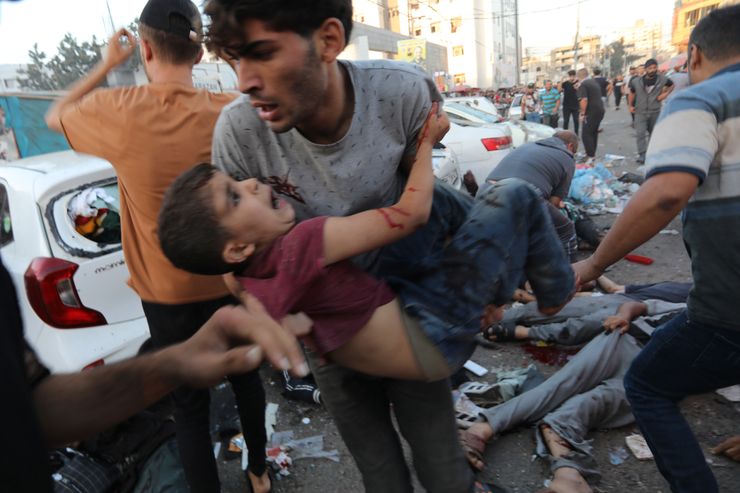
Secretary-General Antonio Guterres said in a statement late Friday that he is “horrified by the reported attack in Gaza on an ambulance convoy outside Al Shifa hospital,” calling the images of bodies strewn on the street “harrowing.”
The secretary-general said international humanitarian law must be respected, including protecting civilians and civilian infrastructure — and not using civilians as human shields. He also called for the delivery of humanitarian supplies across Gaza “at a scale commensurate with this dramatic situation.”
PEOPLE IN GAZA ARE DESPERATE FOR FOOD AND WATER, U.N. OFFICIAL SAYS
UNITED NATIONS — “Maya! Maya! Water! Water!” is now the refrain from people on Gaza streets, the Gaza director for the UNRWA, the United Nation's agency for Palestinian refugees, said Friday.
Thomas White described Gaza as "a scene of death and destruction.” No place is safe now, he said, and people fear for their lives, their futures, and that they will not be able to feed their families.
UNRWA is supporting about 89 bakeries across Gaza aiming to get bread to 1.7 million people, White said in a video briefing to diplomats from the U.N.’s 193 member nations. The average person in Gaza is
living on two pieces of bread
made from flour the U.N. had stockpiled in the territory, he said.But “now people are beyond looking for bread. It’s looking for water,” he said.
U.N. deputy Middle East coordinator Lynn Hastings, who is also the humanitarian coordinator for the Palestinian territories, said only one of three water supply lines from Israel is operational and “many people are relying on brackish or saline ground water, if at all.”