Pakistan launches retaliatory airstrikes in Iran after Tehran attack, killing at least 7 people
Jan 18, 2024
Pakistan’s air force has launched retaliatory airstrikes in Iran allegedly targeting militant positions
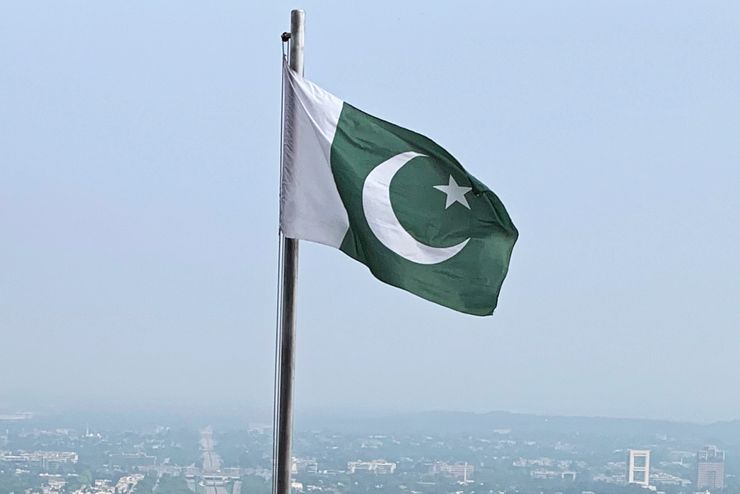
ISLAMABAD (AP) — Pakistan's air force launched retaliatory airstrikes early Thursday in Iran allegedly targeting militant hideouts, an attack that killed at least seven people and further raised tensions between the neighboring nations.
The strikes in Sistan and Baluchestan province followed
Iran’s attack Tuesday on Pakistani soil
that killed two children in the southwestern Baluchistan province. The attacks Tuesday and Thursday appeared to target separate Baluch militant groups that the two countries have alleged find safe havens in the other.The strikes imperil diplomatic relations between the two neighbors, as Iran and nuclear-armed Pakistan have long regarded each other with suspicion over militant attacks.
The attacks also raised the threat of violence spreading in a Middle East unsettled by
Israel’s war with Hamas
in the Gaza Strip. Iran also staged airstrikes late Monday in Iraq and Syria over anIslamic State-claimed suicide bombing that killed over 90 people
earlier this month. Iraq has recalled its ambassador from Iran for consultations.Pakistan’s Foreign Ministry described their attack as “a series of highly coordinated and specifically targeted precision military strikes.”
“This morning’s action was taken in light of credible intelligence of impending large scale terrorist activities,” the Foreign Ministry said in a statement. “This action is a manifestation of Pakistan’s unflinching resolve to protect and defend its national security against all threats.”
Pakistan’s caretaker Prime Minister Anwaarul-Haq-Kakar, who is in Switzerland to attend the World Economic Forum in Davos, cut his trip short to return home, Foreign Ministry spokesperson Mumtaz Zahra Baloch said. Foreign Minister Jalil Abbas Jilani is also returning home from a trip to Uganda.
The Baluch Liberation Army, a separatist group, said in a statement the strikes targeted and killed its people.
“Pakistan will have to pay a price for it," the group warned. “Now the Baluch Liberation Army will not remain silent. We will avenge it and we announce war on the state of Pakistan.”
It wasn't immediately clear what that meant, as Pakistan’s Baluchistan province, as well as Iran’s neighboring Sistan and Baluchestan province, have faced a low-level
insurgency by Baluch nationalists
for more than two decades.Pakistan named its operation “Marg Bar Sarmachar.” In Iranian Farsi, “marg bar” means “death to” — and is a famous saying in Iran since its 1979 Islamic Revolution used to refer to both the United States and Israel. In the local Baluch language, “sarmachar” means guerrilla and is used by the militants operating in the cross-border region.
A deputy governor of Iran's Sistan and Baluchestan province, Ali Reza Marhamati, gave the casualty figures from Thursday's strike in a telephone interview, saying the dead included three women and four children near the town of Saravan along the border in Iran’s Sistan and Baluchestan province. He added that the dead were not Iranian citizens and acknowledged a separate blast near Saravan as well.
HalVash, an advocacy group for the Baluch people, shared images online that appeared to show the remains of the munitions used in the attack. It said a number of homes had been struck in Saravan. It shared videos showing a mud-walled building destroyed and smoke rising over the strike immediately after.
Iranian state television, quoting an anonymous official after the strike, said Tehran strongly condemned the attack and “demanded an immediate explanation” from Pakistan.
Several insurgent groups operate in Iran and Pakistan. They all have a common goal of an independent Baluchistan for ethnic Baluch areas in Afghanistan, Iran and Pakistan.
However, there have been suspicions about state support — or at the least leniency — by countries for certain groups.
Jaish al-Adl, the Sunni separatist group that Iran targeted on Tuesday, has long been suspected of operating out of Pakistan and launching attacks on Iranian security forces.
The Baluch Liberation Army, which formed in 2000 and has launched attacks against Pakistani security forces and Chinese interests, is suspected of hiding out in Iran.
Thursday's development came a day after Pakistan recalled its ambassador to Tehran because of Tuesday's strikes by Iran inside Pakistan's southwestern Baluchistan province. Iran claimed it targeted bases for a militant Sunni separatist group. It drew strong condemnation from Pakistan, which denounced the attack as a “blatant violation” of its airspace and said it killed two children.
The risk of escalation remained Thursday as Iran’s military will begin a planned annual air defense drill from its port of Chabahar near Pakistan all across the south of the country to Iraq. The drill, Velayat 1402, will include live fire from aircraft, drones and air defense systems.
Iran and Pakistan share a 900-kilometer (560-mile), largely lawless border in which smugglers and militants freely pass between the two nations. The route is also key to global opium shipments coming out of Afghanistan.
For both Iran and Pakistan, the cross-border attacks renew questions about the preparedness of their own militaries, particularly their radar and air defense systems.
For Pakistan, such systems are crucial as tensions always remain at a low boil with India, their nuclear-armed rival. Their equipment has long been deployed along the frontier, rather than its border with Iran. For Iran, it relies on those systems against potential strikes by its main enemy, the U.S.
“The government and military have been under immense pressure,” said Abdullah Khan, an analyst at the Pakistan Institute for Conflict and Security Studies. “Iran celebrated (Tuesday's) attack in its media and the Pakistani public perception of a strong army is not as it used to be, so it had to respond.”
There's also complex geopolitical considerations in the tensions. Pakistan's military relies on American, Chinese and French fighter jets for its air force — meaning some of those foreign weapons were used in Thursday's attack.
China, a crucial partner in both countries, had urged restraint. Beijing is a key regional player and has a major Belt and Road development in Gwadar port in Pakistan's Baluchistan province. Baloch, the Foreign Ministry spokesperson, said she was not aware of any direct Chinese mediation in the conflict so far.
___
Gambrell reported from Jerusalem. Associated Press writers Nasser Karimi in Tehran, Iran, and Riazat Butt in Islamabad contributed to this report.