
Most Recent
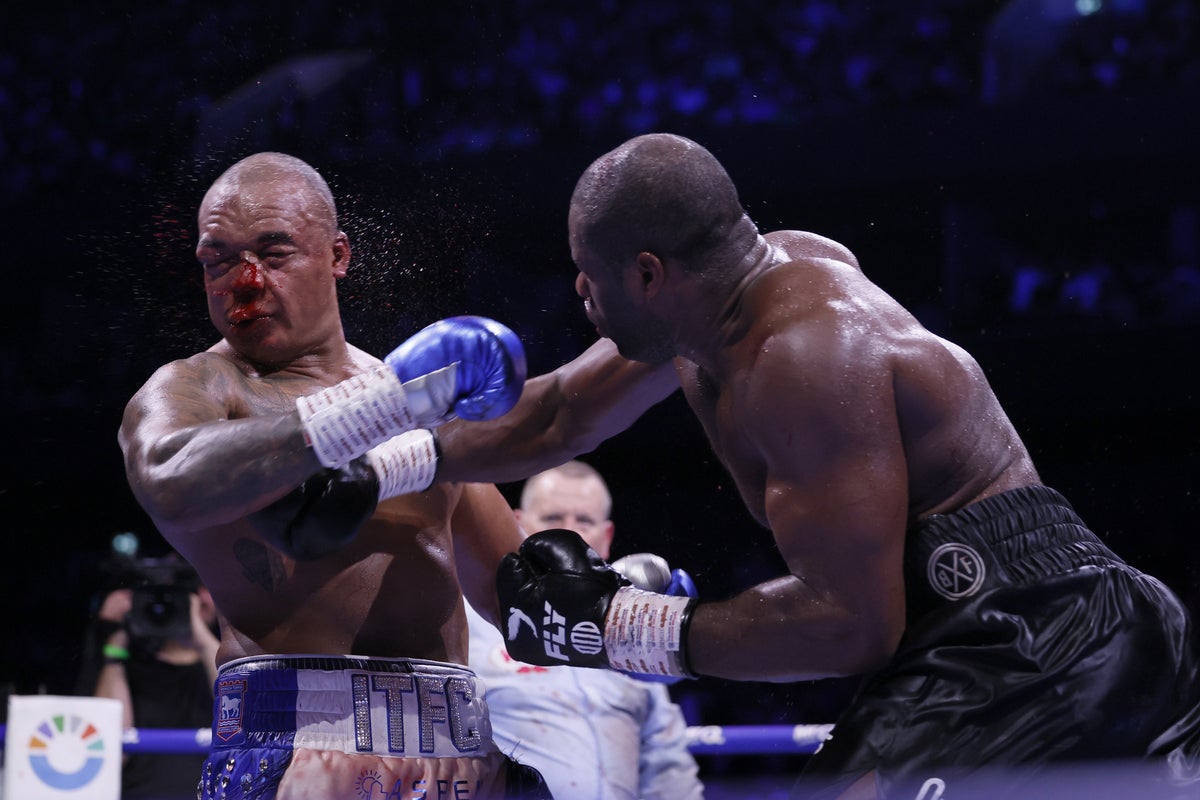
Dubois vs Wardley 2: Start time, undercard and how to watch fight this weekend
Dubois aims to do the double over fellow Briton Wardley, whom he stopped in a chaotic heavyweight-title fight in May
India vs West Indies: Fifth T20 International – teams, start, lineups, Hope
India host West Indies in the final match of the tour on Saturday with an all-time classic T20 series level at 2-2.

Japan issued a 9.9 magnitude earthquake alert, but ground didn't shake: What happened
An "alert" indicating a massive magnitude-9.9 earthquake sent shockwaves of fear across Japan on Friday afternoon. Just eight minutes after its issuance, the Japan Meteorological Agency retracted the warning, which had been triggered by a lesser magnitude-6.9 quake off the Kamchatka Peninsula in Russia. Although the alert caused temporary disruptions in transportation, officials are now investigating the warning system to ensure public safety and prevent future confusion.
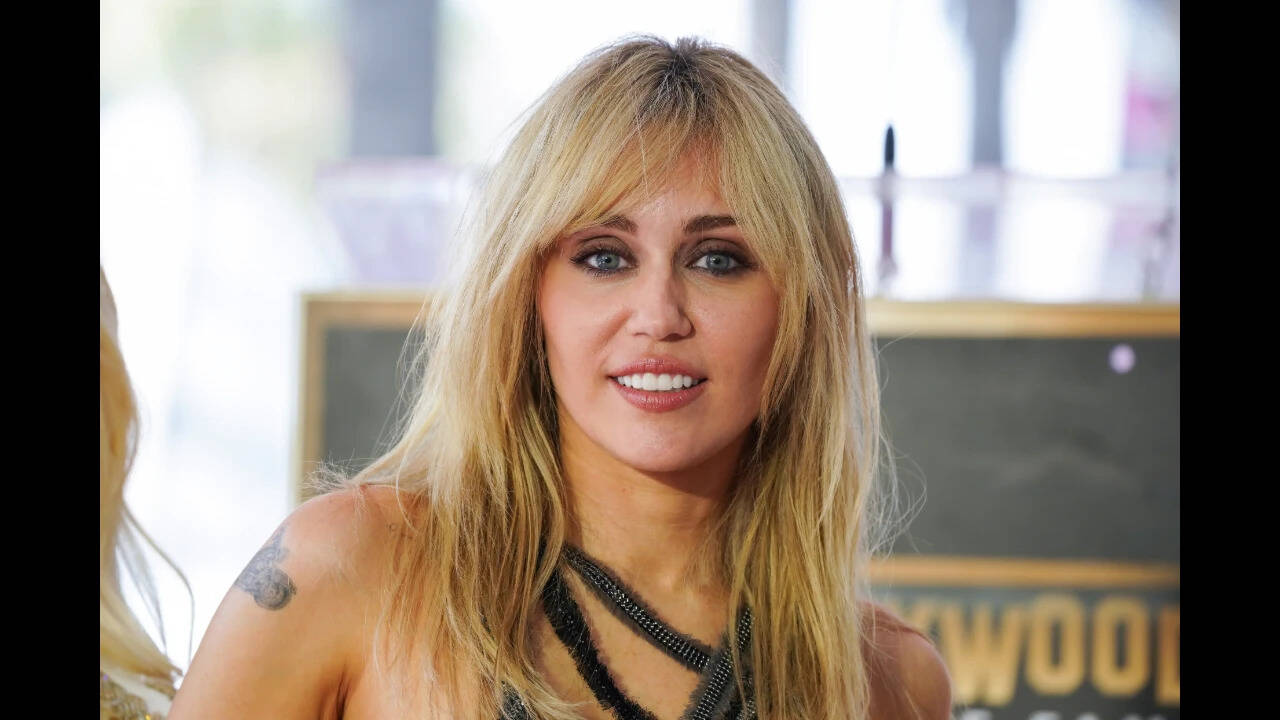
Miley Cyrus pledges $1 million to build 97 homes for homeless women in LA
Miley Cyrus' foundation has pledged $1 million towards Rosa's Place, a housing project in Los Angeles that will provide 97 permanent apartments for women and survivors of violence experiencing homelessness. The donation was announced at the Downtown Women's Center's annual gala, which raised $3.2 million. The development in Skid Row is expected to open in 2027.
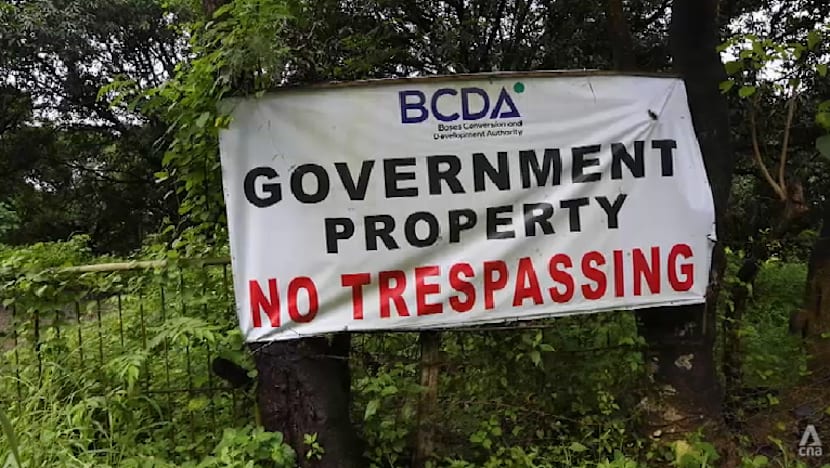
Philippines eyes billions in investment from Pax Silica tech hub, but farmers fear for their livelihoods
A proposed industrial park in Tarlac province under the United States-led Pax Silica initiative could create thousands of jobs, but residents and experts are raising concerns over transparency, displacement and pressure on resources.
China moves to prop up equity market with selling curbs, buybacks
Regulators are also calling on the so-called national team to accelerate stock buys
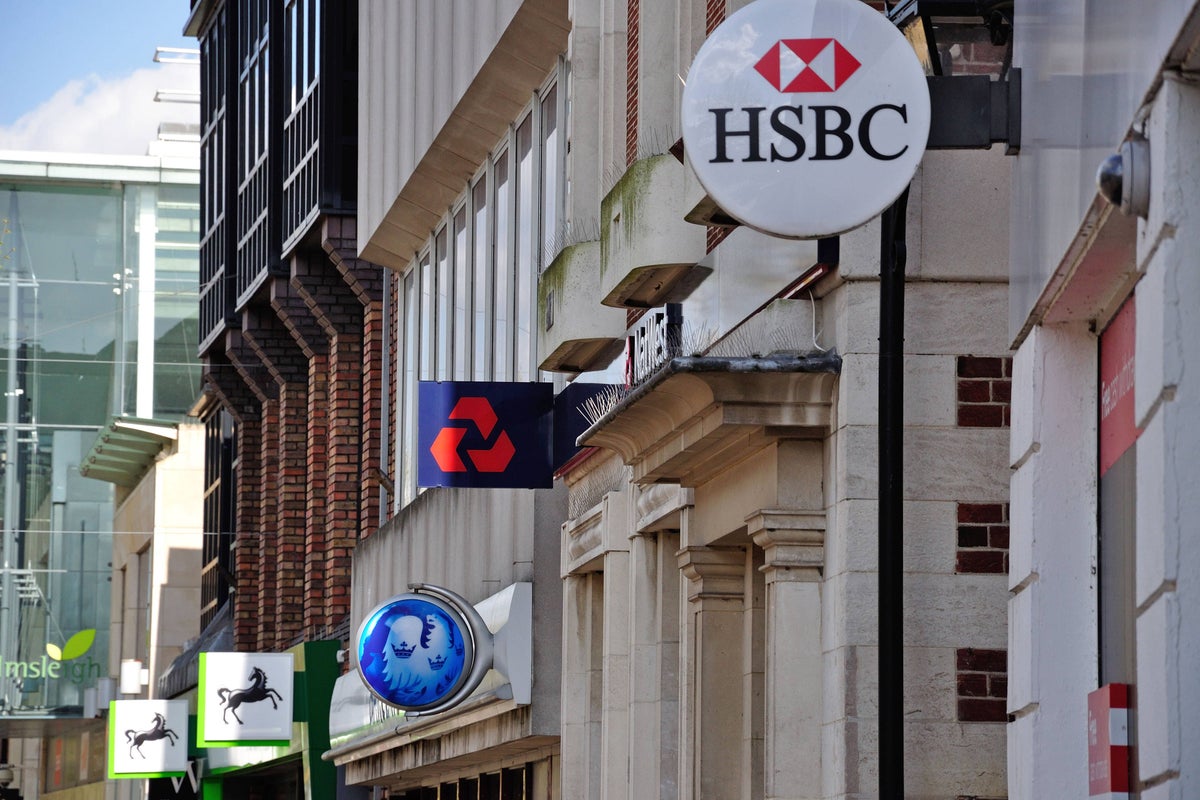
Bank shares drop on reports Chancellor planning Budget tax raid
Speculation is growing that John Healey is poised to hike the surcharge banks pay on their profits in his October 28 Budget.

Nick Clegg’s wife says Gibraltar is Spanish, not British
‘Women don’t think the same as their husband; we have minds of our own’, Ms González Durántez said

Tennessee man’s backyard pool grows into a 500,000-gallon water playground
In Covington, Tennessee, Micky Thornton transformed a childhood aspiration into reality by building a vast backyard pool. Initially a family retreat, this impressive space evolved into a gathering hub, hosting everything from birthday celebrations to weddings. Notably, it has become a venue for over 400 baptisms, deepening its community ties. Thornton's journey showcases that the pursuit of extraordinary dreams demands patience and dedication to refining one’s vision.

Vermont once dreamed of universal healthcare. This Democrat wants to try again — with a twist.
Protest signs seen at protect Medicaid lights up Capitol amid budget showdown, on May 7, 2025, in Washington, DC. | Leigh Vogel/Getty Images for Caring Across Generations Twelve years ago, Vermont Democrats tried to make their state the first in the nation to have a single-payer government-financed healthcare system — a bold experiment to push the limits of American health coverage when Obamacare was just being launched. Their plan failed, and rebooting it became politically impossible, even in Vermont: The Democrats lost the governorship to Republican Phil Scott for what turned out to be a decade. This year, that could finally change. A progressive political newcomer named Amanda Janoo is taking on Scott in what polls show is a tight governor’s race. And if she wins, the state could be poised to try a whole new national experiment: one of Janoo’s central campaign promises is to create a pioneering health system where the state pays the full tab for primary and preventive care, while leaving the rest to the existing system. Key takeaways Amanda Janoo, the Democratic nominee for governor of Vermont, wants to move primary and preventive healthcare to a single-payer system — where the state would pay providers for such care, make it free for patients, and cut insurers out. Previous attempts to pass or enact full single-payer systems have failed at the state level, including in Vermont in 2014. Janoo is trying to focus first on this one relatively smaller slice of the health system, but hopes it could be a starting point to full single-payer reform eventually. Yet even this more limited reform faces difficult political and practical challenges. Janoo’s candidacy is an example of the policy experiments that are becoming possible nationwide in a projected “blue wave” year, when Democrats could sweep into power in a number of states. But in the healthcare universe, her plan is also an example of how even progressive policy idealists are trying to learn from past failures and focus on what they think can actually be achieved. Compared to the sweeping ambition of Vermont’s 2014 effort, or Bernie Sanders’s signature “Medicare-for-All” idea, Janoo’s proposal for single-payer has very specific limits. Under Janoo’s proposal for “universal primary and preventive care” (she typically avoids the term “single-payer”), the state government would pay for Vermonters seeing primary care providers such as doctors and nurse practitioners. This government coverage would be universal and free for patients, and insurance companies would be cut out. However, other parts of the health system – such as hospitals, specialists, and prescription drug companies – would remain under the existing insurance system, for now. Every effort so far to enact full single-payer at the state level has failed — even in blue states, bills and ballot initiatives have regularly gone down to defeat. Vermont’s previous single-payer experiment made it the furthest — it was signed into law but abandoned before being implemented, when the governor concluded it was unworkable. Wherever it’s gained steam, politicians and voters have blanched at the high costs of moving their health systems onto state budgets, and the high taxes that would be necessary to fund them. Now, Janoo is making an attempt to refurbish single-payer as something more achievable, by cutting off a smaller slice of it. “I think it’s clear at this point that a profit-oriented healthcare system is a terrible idea,” Janoo told me in an interview Monday. But after assessing that the state budget made it “unrealistic” to do single-payer immediately, she concluded, “we could do universal primary and preventive care,” financed by a tax on the wealthiest. Indeed, single-payer for primary care seems more achievable precisely because primary care is a relatively less expensive part of the healthcare system. But Janoo hopes it will pay major dividends — that better preventive care will improve Vermonters’ health, reducing costs elsewhere in the system by, for instance, making some hospital visits unnecessary. In speaking to health policy experts about this idea, I heard much sympathy for the goal of universal primary care, but many questions about the details. Would Janoo’s plan be sufficient to bring more primary care doctors to Vermont — and, not unrelatedly, would it pay them more? Would her hoped-for cost savings from preventive care actually materialize? Is picking up the tab for a relatively less expensive part of the healthcare system the best use of sparse state funding? These questions are becoming national ones, as healthcare gains traction as a political issue again. It isn’t just Vermont where primary care reform ideas are gaining steam: Democrats in Minnesota, Washington state, and elsewhere have discussed them. “There is growing interest in a number of states across the country in doing a universal primary care for all program,” Kevin Grumbach, a family physician and a professor of family and community medicine at the University of California San Francisco, told me. Even Gov. Scott, Janoo’s opponent, signed a law calling for a study of universal primary care. One dividing line emerging, though, is whether to keep insurers involved, or to clear them out with a single-payer system, as Janoo wants. Insurers are unpopular with the public, but they can be a formidable political opponent when they argue that the benefits voters currently enjoy might be lost. Scott has said that the idea of universal primary care is appealing — but that if universal is “just code for single payer, I’m not interested. We’ve already been through that.” Yet Janoo is hoping that single-payer for primary care will be a stepping stone – a trial run for eventually making the rest of the state’s health system single-payer down the road. “I think about this often,” Janoo told me. “How do you build the new system as you transition the old — or hospice the old?” Amanda Janoo is tired of “corporate neoliberal bullshit” Janoo has long been an unorthodox economic policy thinker. Her rise is part of a broader trend in which progressives and leftists are winning primaries and gaining influence in the Democratic Party – but she doesn’t fit the prototype of the democratic socialist candidates in New York City, Colorado and elsewhere who’ve gotten much attention this year. Instead, she comes from a different strand of the left, a movement based on a dissident strain of economics and openly skeptical of the benefits of economic growth. Dating back to when she graduated from college in 2010, in the aftermath of the financial crisis, she was part of a younger cohort rebelling against what seemed the glaring failures of the economic establishment. “The one thing coming out of university I was clear on was that neoliberalism was the worst,” Janoo said on a podcast last year. “This whole idea that governments should just take a hands-off approach to the economy and trust in sort of the disciplinary powers of the global free market to lead them to infinite growth seemed highly problematic and very anti-democratic.” So for graduate school, Janoo attended Cambridge to study development economics under the “heterodox” economist Ha-Joon Chang. She then spent several years working abroad in international development for the United Nations and other organizations, before moving back to Vermont and working as an economic policy consultant. In recent years, Janoo became deeply involved with the “well-being economy” movement: an international group of advocates, academics, and experts who criticize what they deem modern capitalism’s obsession with economic growth, and say the “well-being” of humans and the environment should be prioritized instead. They overlap with the “degrowth” movement, which outright argues economic growth should be reduced; last year, Janoo led a workshop at a DeGrowth Institute event on “Degrowth Policy Design.” Trump’s return to power horrified Janoo. “I’m feeling angry about the rise of fascism and the growing threat of world war, because I feel like we don’t have time for this shit,” she said in a speech at an environmental event last year. ”The planet is on fire and ecosystems are collapsing, and that should really be the focus of all of our attention.” But, she said, “I believe I was born in this moment of history for a reason” and vowed “to fight for democracy – for life.” So Janoo decided to jump in the race for governor of Vermont. While she is not running on a degrowth platform, her campaign is deeply informed by aspects of the movement’s thought: skepticism about growth’s benefits, a sense that untrammeled capitalism is leading the world to disaster, and that localism provides a better way. For instance, candidates for governor typically pledge that they’d help bring business investment in, but Janoo said in a July debate: “A lot of the problems we’re facing is because we focus so much on attracting external business.” “Our economy is not super-diversified, and it is not really centered in the most essential kinds of goods and services you want to make sure people have access to no matter what happens — because honestly, things are bad now and they’re going to get worse,” Janoo told me. “I feel a little bit like a collective prepper right now. My motto is, protect what we love, produce what we need.” In the Democratic primary, Janoo’s opponent, Aly Richards, had closer ties to the party establishment and led in fundraising. But Janoo ran as a progressive outsider; she promised to advance a “more economically populist vision” instead of “corporate neoliberal bullshit.” Her health plan became a point of contrast with Richards, who said she wouldn’t run on “magical thinking,” and that she wanted a version of universal primary care that would keep insurance companies involved. Janoo won the primary by 2.5 percentage points. Now, she’s facing Governor Scott, who’s long been viewed as politically untouchable in t