
Most Recent

10 best non-alcoholic wines for every occasion, taste-tested by an expert
From white to red and sparkling rosé, I’ve found the alcohol-free choices that won’t leave you with a hangover

Move over, bat flips. Baseball's slow home run trots could have their World Series moment
Baseball is in a bat-flipping golden era, with players soaking up their turns in the spotlight
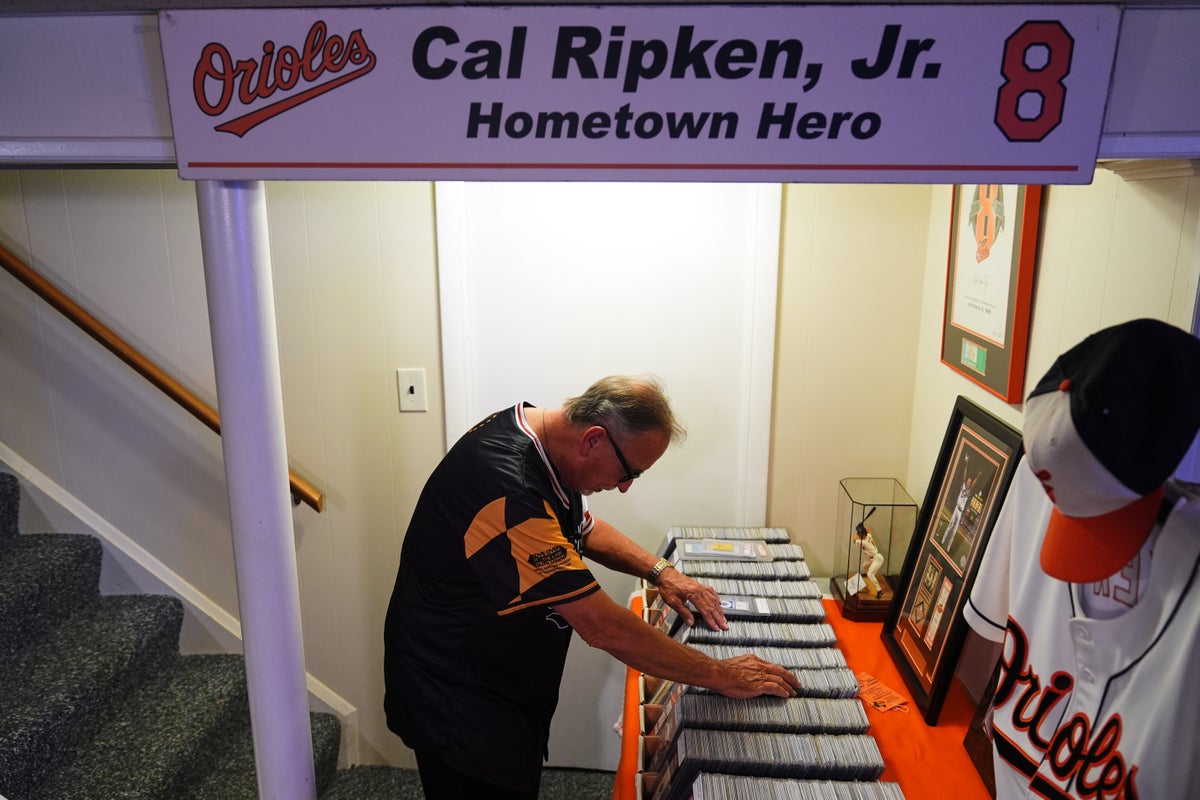
For decades, he’s hunted tickets from Cal Ripken’s ‘Iron Man’ streak. Just 8 elude him
Lifelong Orioles fan Rick Taylor has spent 28 years collecting tickets from every game of Cal Ripken Jr.’s 2,632-game streak

How to ban gerrymandering when the Supreme Court is stacked against you
American elections aren’t what they used to be: Thanks to relentless, politically driven gerrymandering, fewer and fewer congressional seats are truly competitive. Millions of Americans are locked into districts where their vote will never elect the party of their choice. But gerrymandering is also notoriously hard to fix. Many sitting lawmakers owe their seats to districts that have been wildly contorted to create secure seats. So asking legislators to ban gerrymandering often means asking them to endanger their own jobs. Nevertheless, the stars may soon align for opponents of partisan electoral maps. Last time Democrats controlled the US House, they passed a bill that sought to eliminate gerrymandering. That bill died in the Senate. But, if the polls are correct, Democrats are poised to take both houses of Congress in November. If President Donald Trump remains an albatross around Republicans’ necks through 2028, Democrats could soon control both elected branches of government. That’s good news for opponents of gerrymandered maps, because, as recent developments show, any viable solution to congressional gerrymandering will have to come from Congress and not the states. Some blue states, such as California and Virginia, had previously enacted constitutional amendments intended to halt gerrymandering in those states. But Democrats are now trying to bypass those bans because they prevent blue states from countering Republican gerrymanders in red states. Key takeaways Democrats may soon have the votes in Congress to ban gerrymandering, but they still must overcome a hostile Supreme Court. Some of Democrats’ top priorities, such as fixing the Supreme Court’s decisions enabling racial gerrymandering, are almost certainly off the table. Others, like independent redistricting commissions, could run into trouble. Still, the Constitution should give Congress broad authority to tell states how they must draw maps to make them fair and nonpartisan. Still, even if Democrats win the next two federal elections in historic landslides, they then must overcome the final boss monster standing between the United States and fair elections: the Supreme Court. And unless the Court’s membership changes dramatically, that will be no easy task. Until fairly recently, the Supreme Court often blocked racial gerrymanders — those intended to lock voters of a particular race out of power — and it at least held open the possibility that a state’s maps could be struck down because of excessive partisanship. Now, by contrast, many of the Court’s redistricting decisions read like a love letter to partisan maps. The Court’s Republican majority held in Rucho v. Common Cause (2019) that federal courts are forbidden from hearing cases alleging that a particular legislative map was drawn to benefit one political party. More recently, in Louisiana v. Callais (2026), the Court’s Republicans abolished longstanding safeguards against racial gerrymandering, ushering in a new wave of maps that favor white Republicans in the South. There’s no way to guarantee that a Republican Supreme Court won’t simply make up a reason to toss out a Democratic voting rights law, no matter what that law says. Still, there are strategic ways to mitigate that risk. Opponents of gerrymandering can maximize the likelihood that redistricting reforms will survive judicial review by paying close attention to what the Supreme Court has already said about race, election law, and other related topics. Many of the Court’s recent cases suggest that Democrats may want to tweak their approach to a federal redistricting law — and the Court’s opinions give clues into how. Don’t even think about passing a law that mentions race The most obvious trap that Democrats could fall into when drafting an anti-gerrymandering bill is to mention race, or otherwise draw racial distinctions of any kind. Until just a few months ago, the federal Voting Rights Act offered some of America’s strongest protections against gerrymandering. A 1982 amendment to that law prevented many racially polarized states — often states where white people vote Republican and Black people vote for Democrats — from drawing maps that maximized white power. This had the side effect of limiting partisan gerrymandering in that space, because requiring these red states to draw more Black-majority districts meant electing more Democrats. But the Republican justices effectively repealed this amendment, which was signed into law by President Ronald Reagan, in Callais. That’s because all six of the Court’s Republicans swear fealty to an idea known as “colorblindness” — the idea that any law that draws racial distinctions, no matter the purpose, is equally repugnant. Under this theory, laws that aim to lift up historically disadvantaged racial groups are legally indistinguishable from the laws that codified Jim Crow. So, if a new act of Congress requires states to consider race when they draw legislative maps, that new law will almost certainly be struck down by this Court. Congress takes an extraordinary risk, moreover, if it inserts a race-based provision into a broader law governing redistricting, even if the vast bulk of that law does not concern race at all. NFIB v. Sebelius (2012) is one big example of how that could go wrong: In that case, four of the Republican justices claimed that the entire Affordable Care Act must be struck down because those four concluded that just two provisions of the law are unconstitutional. The current Court is both much more conservative and much more Republican than the one that heard NFIB — and probably will be just as motivated on the issue of gerrymandering as they were on Obamacare — so a majority of its members could potentially order an entire act of Congress repealed if they deem one provision in that law unconstitutional. And, even if they do not go that far, they still might carve giant holes in a law because of one provision that mentions race. Democrats seem to understand these limitations: The last time Democrats controlled the House, it passed two significant voting rights bills (both of which died in the Senate). The For the People Act is an omnibus bill that includes many of the Democratic Party’s ideas to improve elections, including several provisions targeting gerrymandering. Meanwhile, the John R. Lewis Voting Rights Advancement Act seeks to undo many of the Supreme Court’s attacks on the Voting Rights Act, the landmark law barring race discrimination in voting, while also enhancing some of the VRA’s protections. Democrats’ decision to, well, segregate racial reforms from their other voting rights proposals shows that they understand many of the tactical decisions they need to make because of this Court. By placing race-related reforms in the John Lewis Act, while passing non-race-related ideas in the separate For the People Act, Democrats reduce the likelihood that the later bill will fall. It would be extraordinary, even for this Supreme Court, to strike down one law because five or more justices deem an entirely separate law unconstitutional. But let’s say the Democrats decide the best way to get gerrymandering reform through early next year is by reviving the For the People Act. That bill’s anti-gerrymandering provisions do still contain some references to race which Democrats may want to strip out in an abundance of caution. The bill, for example, would require states to draw their congressional districts using a commission made up of Democrats, Republicans, and people affiliated with neither party. One provision of this bill provides that the pool of potential members of these commissions should be screened to ensure that it is “representative of the demographic groups (including racial, ethnic, economic, and gender) and geographic regions of the State.” Because this provision requires the government to consider race, this Court would very likely strike it down. If that happens, the Court might simply excise the reference to race from the broader statute and leave the rest of it intact, but there’s a danger that this Court could strike down all of the For the People Act’s provision calling for congressional maps to be drawn by independent commissions — or even possibly the entire Act. So If Democrats decide the best way to enact gerrymandering reform early next year is by reviving that bill and finally getting it passed, they may want to strip out any mentions of race in an abundance of caution. Relying on independent redistricting commissions to draw congressional districts is a dicey proposition with this Supreme Court At least eight states currently use independent commissions to draw legislative maps, and several other states involve commissions in their mapmaking process. It’s a promising model because empirical research does suggest that these commissions are effective in reducing partisanship in legislative maps. One recent study, for example, found that moving from legislatively drawn maps to commissions “would increase the share of competitive seats within a state from 25 percent to 38 percent on average.” The idea behind an independent commission is to take the task of drawing maps away from a partisan state legislature, and give it to a multipartisan body tasked with drawing maps that favor neither major political party. The For the People Act adopts this model. It proposes that each state should have a 15-member commission consisting of five Democrats, five Republicans, and five people affiliated with neither major party. Elected officials and their immediate family, candidates for office, significant political donors, and lobbyists are all barred from commission membership. But there’s a constitutional problem with this approach, which arises out of a surprisingly banal question: Who, exactly, would employ these commissioners? One possibility is to make them federal officials. But if these commissioners are employed by the federal government, the Const

Upper Bukit Timah Canal upgrade completed, boosting flood resilience with 30% more capacity
PUB will also study longer-term flood mitigation measures for the wider Bukit Timah catchment, including underground detention structures to temporarily store excess stormwater.
Many Latinos are done with Trump. The shift is especially striking in Texas
Latino voters are souring on the GOP, fueled by frustration over rising costs and the Trump administration's aggressive approach to immigration enforcement.
Trump ramps up fraud investigations of immigrants as election approaches
The White House is turning anti-fraud initiatives into a central weapon in its efforts to curb both legal and illegal immigration.

Elon, Starlink and the betrayal of Ukraine
SpaceX's Starlink service in Ukraine had its speed throttled recently, causing disruptions to their defense operations during Russian attacks. What does this reveal about big tech's role in modern warfare?

US Treasury proposes a rule to crack down on high-tech investments in China, other adversaries
The US government has been working for years to deny China and other adversaries investments that could help them boost their military power
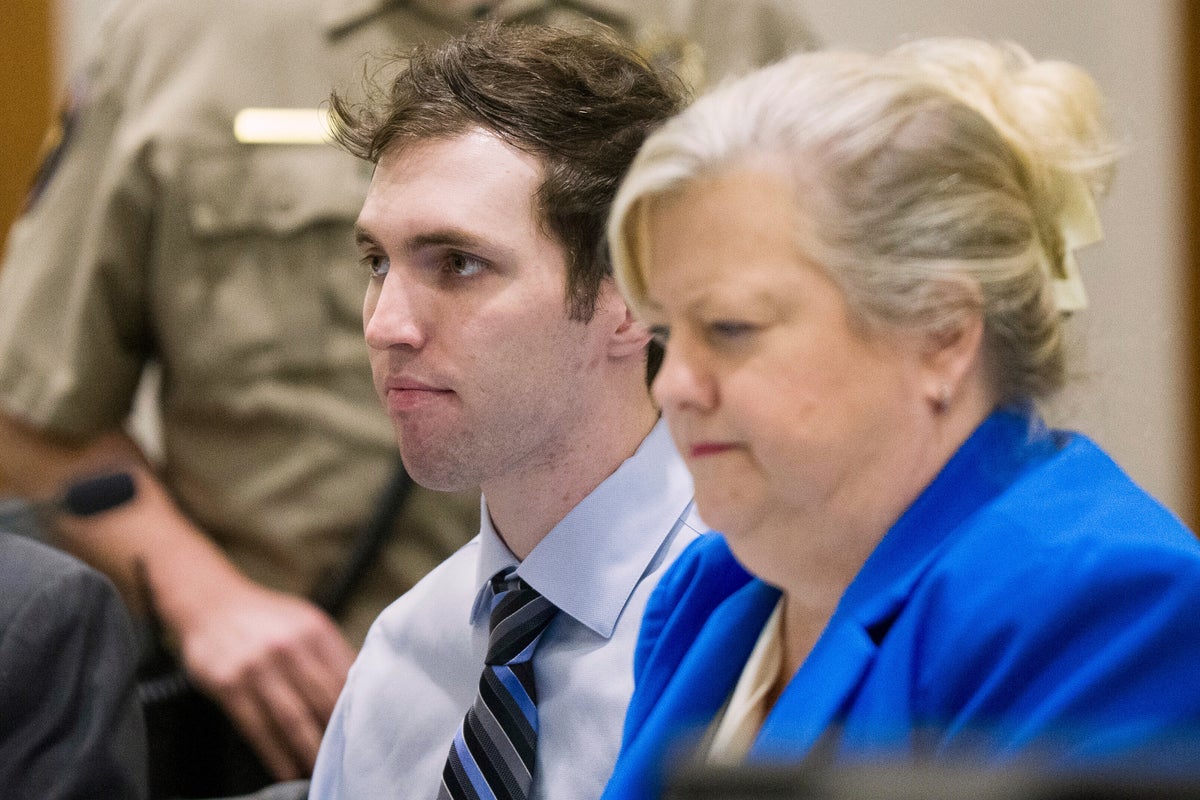
Defense attorneys in Charlie Kirk's killing say they need several years to prepare for trial
Defense attorneys for the man accused of assassinating conservative activist Charlie Kirk are suggesting a 2029 trial date, saying they could need several more years to prepare their case