Distinguished Veterinarian and Research Biologist Joins NAI Board of Directors

Oct 6, 2020

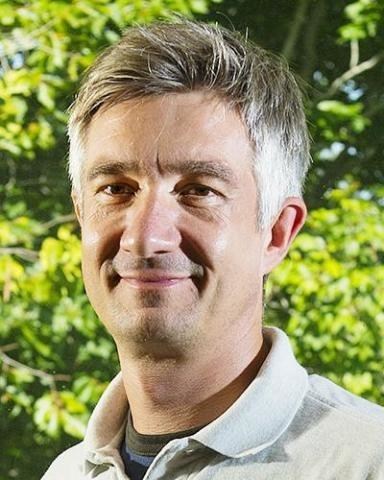
TAMPA, Fla., Oct. 6, 2020 /PRNewswire/ -- The National Academy of Inventors (NAI) announced today that Pierre Comizzoli Ph.D., D.V.M. will be joining its Board of Directors. Dr. Comizzoli is scientist at the Smithsonian Institution and Senior Program Officer for Science in the Office of the Under-Secretary of Science and Research.
Continue Reading

Dr. Pierre Comizzoli joins NAI BOD

He began his career as a veterinarian 25 years ago in French Guyana studying the seasonal reproduction of different mammalian species living in the rain forest. After an appointment in the African Sahelo-Saharan region to lead a livestock health and fertility program, Dr. Comizzoli completed his PhD on animal in vitro fertilization.

In 2002 he joined the Smithsonian Conservation Biology Institute at Washington, DC 's National Zoological Park as a staff scientist developing cryo-banking on gametes and gonadal tissues from rare and endangered species.

In addition to 15 years of studies funded by National Institutes of Health grants, Dr. Comizzoli has published over 120 peer-reviewed papers and book chapters,

He has also received several distinguished awards including the Smithsonian Secretary's Research Prize and the Presidential Early Career Award for Scientists and Engineers for his innovative work on fertility preservation. More recently, he has received the Innovation Award from the National Research Council of Thailand with his Thai colleagues.

 "We are delighted that Dr. Comizzoli has accepted a position on the NAI Board of Directors," said Paul Sanberg, president of NAI.  "His distinguished career and extensive experience both globally and at the Smithsonian will offer a unique perspective for our Board."

About the National Academy of Inventors

NAI is a member organization comprising U.S. and international universities, and governmental and non-profit research institutes, with over 4,000 inventor members and Fellows spanning more than 250 institutions worldwide. It was founded in 2010 to recognize and encourage inventors with patents issued from the U.S. Patent and Trademark Office (USPTO), enhance the visibility of academic innovation, encourage the disclosure of intellectual property, educate and mentor innovative students, and translate the inventions of its members to benefit society. The NAI works collaboratively with the USPTO and publishes the multidisciplinary journal, Technology and Innovation. www.academyofinventors.org.

Media Contact

Contact: Jody Santoro

[email protected]

+1-813-974-0782

SOURCE National Academy of Inventors

More News

The uncomfortable truth about aquariums
Sep 22, 2026
The uncomfortable truth about aquariums

Young visitors watch the beluga whales at L'Oceanogràfic in Valencia, Spain. | Miguel Candela/SOPA Images/LightRocket via Getty Images This story appeared in Today, Explained, a daily newsletter that helps you understand the most compelling news and stories of the day. Subscribe here. Four beluga whales have died in a month at one of America’s top-rated aquariums — a tragic development and, arguably, a reason to revisit the ethics of zoos. (More on that in just a minute.) The latest cetacean casualty, a 26-year-old female named Osiris, died at Chicago’s Shedd Aquarium yesterday. She follows 34-year-old Beethoven, a longtime resident of the aquarium, as well as 20-year-old Rain and 23-year-old Peekachu, who died in late August and early September.    Osiris, Rain and Peekachu were all part of the Marineland diaspora: a group of four dolphins and 30 beluga whales that rescuers have worked to relocate since the 2024 closure of a scandal-plagued theme park in Niagara Falls, Canada. This summer, the animals were successfully transferred to aquariums and marine parks in the US and Spain. That was a frankly incredible undertaking involving padded shipping containers, a police-escorted convoy and a chartered plane.  But in some regards, the international flight wasn’t even the hardest part of the whales’ journeys. Some of the animals have struggled to thrive in their new environments — even when those environments are state-of-the-art, like Shedd.  In a blog post announcing Osiris’s death, the aquarium noted that its rescued whales had been under 24-hour supervision and receiving intensive, specialized care. The aquarium is still investigating the cause of death for all four whales.  Go a little deeper View Link Believe me when I tell you that it gives me no pleasure to write the following paragraphs. I really love aquariums. In fact, as a kid, I grew up visiting the now-shuttered and much-maligned Marineland.  But incidents like these back-to-back deaths should prompt us all to ask ourselves who aquariums and zoos are actually for. And the answer, I regret to tell you, is frequently not “the animals” — though zoos and aquariums have, since the mid-20th century, marketed themselves as both tourist attractions and important players in wildlife education and conservation.   As my colleague Kenny Torrella writes, these institutions and their defenders argue they protect animals in three ways: first, by raising money for wildlife conservation projects; second, by helping to reintroduce vulnerable species back into the wild; and third, by inspiring visitors to take an interest in the environment. The Shedd Aquarium’s motto, for instance, is “For Love of Waterkind.”  It’s worth scrutinizing those purported virtues, however — even when prestigious and reputable institutions like Shedd are making them. On one hand, there is merit to the claim that zoos and aquariums fundraise for wildlife conservation: In 2022, the latest year for which data is available, one group of accredited zoos and aquariums spent more than a quarter of a billion dollars on habitat projects.  The evidence is thinner on the other points, though. It’s incredibly rare for aquariums and zoos to reintroduce endangered species back into the wild — that’s very difficult to do. And surveys of zoo and aquarium visitors show that merely seeing a wild animal in a tourist setting doesn’t generally galvanize people on matters of welfare or stewardship. Living in captivity in that tourist setting, however, can be stressful (or worse) for the animals themselves.  But what would a humane alternative look like? Even if zoos and aquariums stopped catching animals in the wild, that would still leave many thousands who are injured, orphaned, born in captivity, or otherwise accustomed to human care.  When it comes to whales, one nonprofit advocacy organization is already working on an alternative: a 110-acre coastal sanctuary for “retired” whales. That project, however, is still a long way from completion. And in the meantime, it’s up to consumers to decide whether the stated benefits of zoos and aquariums outweigh the potential harms to the animals they exhibit. One link for later ➨ Beware the trap of “moral perfection.” We should all endeavor to live lives that embody our values, sure. But if you never board a plane because you care about the climate, or you never take your kid to zoos because you read the arguments above, then you might end up with a smaller, less-lived life. And that’s no good, either.  Before you go… Did you know…that there have been “revolutionary” advancements in Alzheimer’s treatments in just the past five years? Two new drugs both markedly slow the progress of dementia. Today’s trivia: Geography time! What country is bordered by Chad to the east and Mali to the west? Hint: It is the second-largest landlocked African nation. (You can find this and other brain puzzles in Vox’s daily crossword. Look for the answer in tomorrow’s edition.) Yesterday’s trivia: Yesterday we asked you for the classic Broadway star who first sang hits including “There’s No Business Like Show Business.” That would be Ethel Merman, whom one biographer dubbed “the most successful musical comedy performer of her generation.”

YOUR NEWS, OUR NETWORK.

Do you have Great News you want to tell the world?

Be it updates about your business or your community, you can make sure that it’s heard by submitting your story to our network reaching hundreds of news sites across 6 verticals.

Expert Features

The Expert Features reports on the issues and the world’s everyday news. Handled by experts in different niches, you will find different subjects and perspectives.