Merge Unveils Web-First Platform to Bring 3D Spatial Learning and Creation to Any Device

Sep 22, 2026

The award- winning platform eliminates app store hurdles to deliver browser-based 3D objects, simulations, and AR + AI creation tools across K-12 classrooms.

San Antonio, United States, September 22, 2026 -- SAN ANTONIO, TX — September 21, 2026 — Merge, a leader in augmented reality and spatial learning tools for education, today announced the release of the all-new Merge 3D Platform. Built entirely for the web, the new platform delivers active, embodied learning and creation directly to student desks without app store downloads, MDM deployment delays, or specialized hardware requirements.

In recognition of its innovation and impact on daily instruction, Merge 3D was named a Tech & Learning Best of Show Award Winner at ISTE 2026. Selected by a panel of expert educators and editors, the award honors exemplary technology showcased on the ISTE exhibit floor.

The award- winning platform eliminates app store hurdles to deliver browser-based 3D objects, simulations, and AR + AI creation tools across K-12 classrooms.

Eliminating Friction for Everyday Classrooms

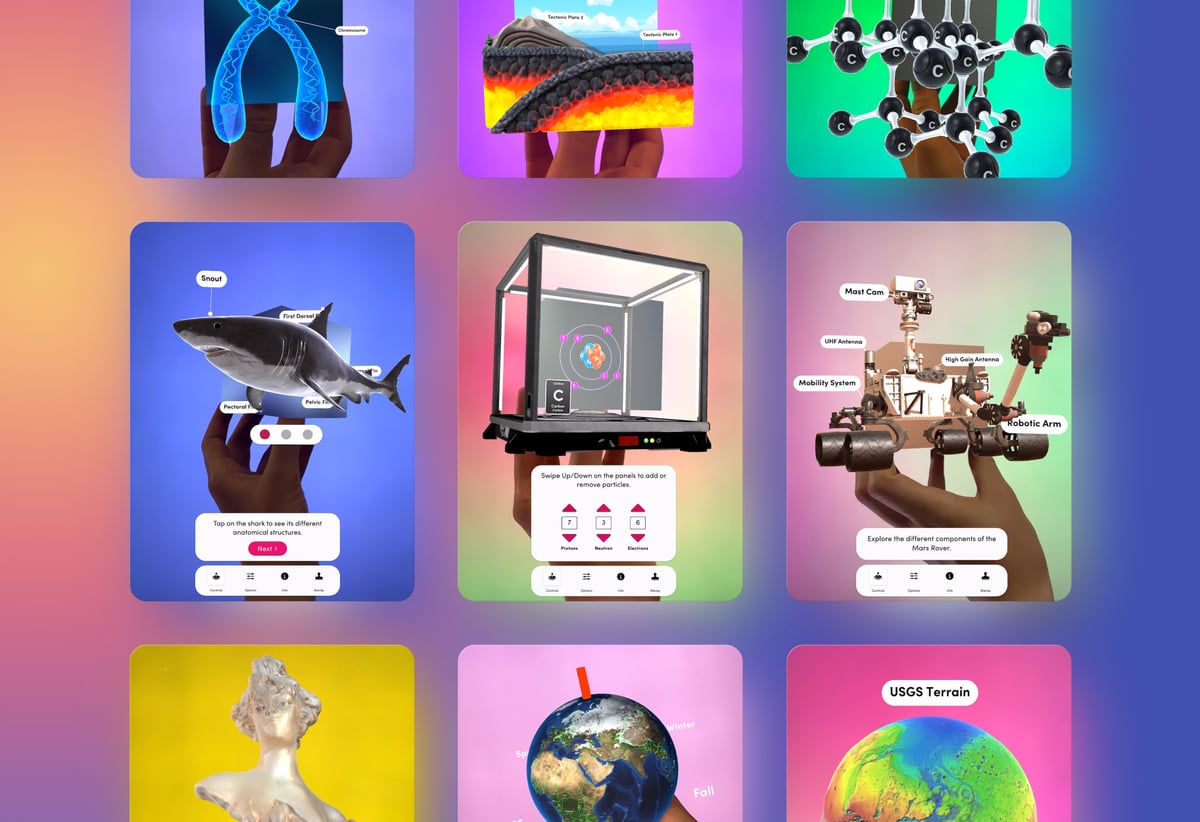
By transitioning to a web-first architecture, Merge 3D allows K-12 students to explore complex science simulations, inspect digital artifacts, and create their own 3D models using standard web browsers on Chromebooks, Mac and Windows laptops, PCs, iPads, and smartphones.

Key Features of the Merge 3D Launchpad:

  • Centralized Content & Curriculum: Access thousands of interactive 3D simulations, open collections from world-renowned educational partners, and standards-aligned activity plans in one dashboard.

  • AI-Powered Creation Tools: Enables students to generate, animate, and code interactive 3D models using natural language prompts, sketches, and photos.

  • District-Level Administrative Controls: Centralized tools for managing user permissions, content access, and settings across entire districts.

Active, Embodied Learning at Every Desk

Merge 3D transforms passive screens into interactive 3D learning environments through dynamic interaction modes:

  • Hand Tracking: Uses device cameras to let students manipulate 3D models on screen with natural gestures.

  • Head Tracking: Converts device screens into dynamic 3D viewing windows based on head movement.

  • Merge Cube Mode: Delivers tactile, hands-on interaction in the palm of a student's hand using augmented reality technology.

  • 3D & Anaglyph Mode: Offers accessible, high-impact 3D viewing on standard device screens.

"At Merge, our goal is to empower the next generation to explore, learn and create in 3D with technology that fits seamlessly into daily instruction," said Franklin Lyons, Founder of Merge. "By bringing Merge 3D to the web, any student can now hold the universe, visualize abstract structures, and create their own interactive learning experiences in 3D all from their regular, everyday classrooms."

Educators and administrators can get a free trial at www.TryMerge.com, and explore the new Merge 3D by visiting Dashboard.Merge 3d.ai.

Merge 3D | Explore, learn & create in 3D.Merge 3D Blog

About Merge

Merge develops spatial learning technology that helps millions of students worldwide understand complex ideas, engage more deeply, and create their own learning experiences through interactive 3D objects, embodied learning, and AI + AR-powered creation tools. Learn more at www.merge3d.ai.
Contact Info:
Name: Merge Communications Team
Email: Send Email
Organization: Merge 3D
Website: https://www.merge3d.ai

Release ID: 89204092

In the event of detecting errors, concerns, or irregularities in the content shared in this press release that require attention or if there is a need for a press release takedown, we kindly request that you inform us promptly by contacting [email protected] (it is important to note that this email is the authorized channel for such matters, sending multiple emails to multiple addresses does not necessarily help expedite your request). Our dedicated team will promptly address your feedback within 8 hours and take necessary actions to resolve any identified issues diligently or guide you through the removal process. Providing accurate and dependable information is our utmost priority.

More News

The uncomfortable truth about aquariums
Sep 22, 2026
The uncomfortable truth about aquariums

Young visitors watch the beluga whales at L'Oceanogràfic in Valencia, Spain. | Miguel Candela/SOPA Images/LightRocket via Getty Images This story appeared in Today, Explained, a daily newsletter that helps you understand the most compelling news and stories of the day. Subscribe here. Four beluga whales have died in a month at one of America’s top-rated aquariums — a tragic development and, arguably, a reason to revisit the ethics of zoos. (More on that in just a minute.) The latest cetacean casualty, a 26-year-old female named Osiris, died at Chicago’s Shedd Aquarium yesterday. She follows 34-year-old Beethoven, a longtime resident of the aquarium, as well as 20-year-old Rain and 23-year-old Peekachu, who died in late August and early September.    Osiris, Rain and Peekachu were all part of the Marineland diaspora: a group of four dolphins and 30 beluga whales that rescuers have worked to relocate since the 2024 closure of a scandal-plagued theme park in Niagara Falls, Canada. This summer, the animals were successfully transferred to aquariums and marine parks in the US and Spain. That was a frankly incredible undertaking involving padded shipping containers, a police-escorted convoy and a chartered plane.  But in some regards, the international flight wasn’t even the hardest part of the whales’ journeys. Some of the animals have struggled to thrive in their new environments — even when those environments are state-of-the-art, like Shedd.  In a blog post announcing Osiris’s death, the aquarium noted that its rescued whales had been under 24-hour supervision and receiving intensive, specialized care. The aquarium is still investigating the cause of death for all four whales.  Go a little deeper View Link Believe me when I tell you that it gives me no pleasure to write the following paragraphs. I really love aquariums. In fact, as a kid, I grew up visiting the now-shuttered and much-maligned Marineland.  But incidents like these back-to-back deaths should prompt us all to ask ourselves who aquariums and zoos are actually for. And the answer, I regret to tell you, is frequently not “the animals” — though zoos and aquariums have, since the mid-20th century, marketed themselves as both tourist attractions and important players in wildlife education and conservation.   As my colleague Kenny Torrella writes, these institutions and their defenders argue they protect animals in three ways: first, by raising money for wildlife conservation projects; second, by helping to reintroduce vulnerable species back into the wild; and third, by inspiring visitors to take an interest in the environment. The Shedd Aquarium’s motto, for instance, is “For Love of Waterkind.”  It’s worth scrutinizing those purported virtues, however — even when prestigious and reputable institutions like Shedd are making them. On one hand, there is merit to the claim that zoos and aquariums fundraise for wildlife conservation: In 2022, the latest year for which data is available, one group of accredited zoos and aquariums spent more than a quarter of a billion dollars on habitat projects.  The evidence is thinner on the other points, though. It’s incredibly rare for aquariums and zoos to reintroduce endangered species back into the wild — that’s very difficult to do. And surveys of zoo and aquarium visitors show that merely seeing a wild animal in a tourist setting doesn’t generally galvanize people on matters of welfare or stewardship. Living in captivity in that tourist setting, however, can be stressful (or worse) for the animals themselves.  But what would a humane alternative look like? Even if zoos and aquariums stopped catching animals in the wild, that would still leave many thousands who are injured, orphaned, born in captivity, or otherwise accustomed to human care.  When it comes to whales, one nonprofit advocacy organization is already working on an alternative: a 110-acre coastal sanctuary for “retired” whales. That project, however, is still a long way from completion. And in the meantime, it’s up to consumers to decide whether the stated benefits of zoos and aquariums outweigh the potential harms to the animals they exhibit. One link for later ➨ Beware the trap of “moral perfection.” We should all endeavor to live lives that embody our values, sure. But if you never board a plane because you care about the climate, or you never take your kid to zoos because you read the arguments above, then you might end up with a smaller, less-lived life. And that’s no good, either.  Before you go… Did you know…that there have been “revolutionary” advancements in Alzheimer’s treatments in just the past five years? Two new drugs both markedly slow the progress of dementia. Today’s trivia: Geography time! What country is bordered by Chad to the east and Mali to the west? Hint: It is the second-largest landlocked African nation. (You can find this and other brain puzzles in Vox’s daily crossword. Look for the answer in tomorrow’s edition.) Yesterday’s trivia: Yesterday we asked you for the classic Broadway star who first sang hits including “There’s No Business Like Show Business.” That would be Ethel Merman, whom one biographer dubbed “the most successful musical comedy performer of her generation.”

YOUR NEWS, OUR NETWORK.

Do you have Great News you want to tell the world?

Be it updates about your business or your community, you can make sure that it’s heard by submitting your story to our network reaching hundreds of news sites across 6 verticals.

Expert Features

The Expert Features reports on the issues and the world’s everyday news. Handled by experts in different niches, you will find different subjects and perspectives.